Last Updated on March 23, 2026
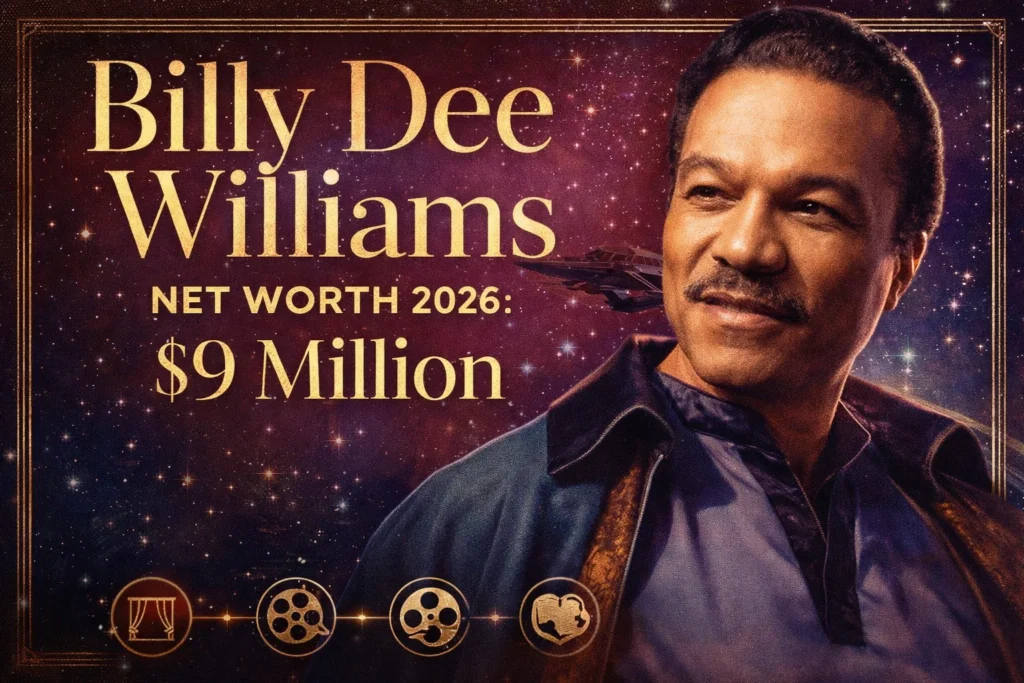
Quick Answer: Billy Dee Williams’ net worth in 2026 is estimated at approximately $9 million.
There are very few actors in Hollywood history who can claim an eight-decade career, a globally iconic role in one of the most successful film franchises ever made, and a parallel life as a serious fine artist. Billy Dee Williams net worth in 2026 stands at an estimated $9 million a figure that reflects not just box office salaries, but royalties, art sales, convention appearances, endorsements, and a quietly diversified financial life that most fans never think about. At 88 years old, Williams remains one of American entertainment’s most charismatic and enduring figures, and his wealth tells a story as layered as any role he has ever played.
Disclaimer: Net worth figures are estimates based on publicly available data and may vary. Actual financial details are private and not independently verified.
Bio Data Table
| Detail | Information |
|---|---|
| Full Name | William December Williams Jr. |
| Stage Name | Billy Dee Williams |
| Date of Birth | April 6, 1937 |
| Age (2026) | 88 years old |
| Birthplace | Harlem, New York City, USA |
| Nationality | American |
| Profession | Actor, Painter, Author, Singer |
| Most Famous Role | Lando Calrissian – Star Wars franchise |
| Active Career | 1943 – Present |
| Spouse | Teruko Nakagami (m. 1972) |
| Children | Corey Dee Williams, Hanako Williams, Miyako (stepdaughter) |
| Estimated Net Worth (2026) | $9 Million |
| Primary Income Source | Acting, Art Sales, Royalties, Convention Appearances |
Who Is Billy Dee Williams
William December Williams Jr. was born on April 6, 1937, in Harlem, New York City, to Loretta Anne and William December Williams Sr. From the very beginning, culture was woven into the fabric of his upbringing. His mother had trained as an opera singer, his family frequented the theater, and his twin sister Loretta grew up in the same richly artistic household. When their parents needed to work multiple jobs to make ends meet, Billy and Loretta were raised largely by their grandmother in the Sugar Hill section of Harlem one of the most culturally vibrant Black neighborhoods in American history.
His introduction to performance came shockingly early. At just seven years old, in 1945, Williams made his Broadway debut in The Firebrand of Florence, a role he landed because his mother an elevator operator at the Lyceum Theatre overheard producers searching for a child actor and stepped forward on her son’s behalf. That moment would set the trajectory for an entire life in entertainment.
Williams attended the prestigious Fiorello H. LaGuardia High School of Music & Art and Performing Arts, graduating in 1955. He then earned a two-year scholarship to the National Academy of Fine Arts and Design in New York, where he studied classical painting principles and won the Halligarten Prize an early indicator that his artistic talents ran far deeper than the stage. He also trained at the Harlem Actors Workshop under the guidance of Sidney Poitier, who would become both a peer and a complicated professional rival in the years that followed, as the scarcity of leading roles for Black men in Hollywood meant the two often competed for the same parts.
What makes Billy Dee Williams remarkable is that he never allowed himself to be defined by a single medium. From his earliest days, he balanced acting with painting two pursuits that would both, eventually, contribute to his net worth in meaningful ways.
Net Worth Overview
As of 2026, Billy Dee Williams’ net worth is estimated at approximately $9 million. This places him comfortably within the upper tier of working actors from the classic Hollywood era who remained financially stable through careful career management rather than blockbuster paychecks alone.
His wealth did not come from one enormous windfall. Instead, it accumulated gradually through decades of steady acting work, a lucrative Colt 45 advertising partnership in the 1980s, recurring royalties from the Star Wars franchise, fine art sales that have continued since his first solo exhibition in 1991, convention appearance fees, and book sales. By any measure, this is a diversified income portfolio built by someone who understood early that an actor’s career is never permanent — and who prepared accordingly.
Net Worth Growth Timeline
Before Fame (1943–1970)
These were the lean years. Williams worked consistently on Broadway, in television bit parts, in regional theater but the structural limitations of Hollywood during the 1950s and 1960s meant that leading roles for Black actors were extraordinarily rare. Most went to Sidney Poitier, who had established himself as the industry’s accepted exception to the rule. Williams supplemented his acting income with painting commissions and teaching, building his craft while waiting for the opportunity he knew would eventually come.
Breakthrough Phase (1971–1982)
Everything changed with Brian’s Song in 1971. Williams’ portrayal of Chicago Bears legend Gale Sayers in the TV movie earned him an Emmy nomination for Best Actor a validation that the industry had been slow to extend. Berry Gordy signed him to a seven-year contract at Motown, and within a year Williams was starring opposite Diana Ross in Lady Sings the Blues (1972), a film that made him a genuine leading man and a household name. Mahogany (1975) followed, cementing his status.
Then came 1980. His casting as Lando Calrissian in Star Wars: Episode V – The Empire Strikes Back wasn’t just a career milestone; it was a cultural one. Williams became the first prominent Black character in a major science fiction franchise at a time when representation in genre cinema was essentially nonexistent. His salary for the film, combined with back-end royalties and merchandise licensing that would pay dividends for decades, marked the beginning of his most financially significant era.
Peak and Recent Years (1983–2026)
Williams reprised Lando Calrissian in Return of the Jedi (1983), appeared as Harvey Dent in Tim Burton’s Batman (1989), and continued steadily through television with appearances in Dynasty, The Jeffersons, That ’70s Show, and General Hospital, among dozens of others. His 2019 return as Lando in Star Wars: The Rise of Skywalker reintroduced him to a new generation of fans and reinvigorated his convention circuit income considerably.
By his mid-eighties, Williams had transitioned into a gentler public role appearing at fan conventions, exhibiting his paintings, and accepting lifetime achievement recognition. His net worth has remained stable in the $9 million range, with passive royalty income and art sales providing ongoing earnings even without active film work.
Main Sources of Income
Core Profession: Acting
Williams has accumulated 168 acting credits across a career spanning more than eight decades. His major film salaries from Star Wars, Lady Sings the Blues, Mahogany, and Batman formed the financial foundation of his wealth. While exact contract figures were never publicly disclosed, leading roles in major studio films of the 1970s and 1980s typically commanded between $500,000 and $2 million per picture for established stars of his standing.
Royalties and Franchise Revenue
Perhaps the most underappreciated aspect of Billy Dee Williams’ financial picture is the role of royalties. Star Wars is one of the most profitable entertainment franchises in history, and actors with significant roles — particularly in the original trilogy have benefited from licensing agreements, home video residuals, and streaming deals across multiple generations of media distribution. His voice work as Lando Calrissian in Star Wars video games added another layer to this revenue stream.
Brand Endorsements and Sponsorships
In the 1980s, Williams became the face of Colt 45 malt liquor in one of the most memorable advertising campaigns of the decade. His smooth delivery and undeniable screen charisma made him ideal for the brand, and the partnership was lucrative enough to be parodied and referenced in popular culture for years afterward. He has also appeared in television commercials and promotional campaigns throughout his career, contributing meaningfully to his total earnings.
Fine Art Sales
This is perhaps the most distinctive income stream in his financial portfolio. Williams has been a serious painter throughout his adult life, and since mounting his first solo exhibition in 1991, he has sold work through galleries across the United States. One of his paintings has been listed for sale at $50,000. He served as honorary chairman of the Thelonious Monk Institute of Jazz, which has used his artwork in competition programs since 1990. For an actor, this represents a genuinely alternative income stream and one that appreciates rather than depreciates over time.
Convention Appearances and Fan Events
The science fiction convention circuit is a significant revenue source for legacy Star Wars actors. Appearance fees at major events like San Diego Comic-Con, Star Wars Celebration, and regional conventions can range from $50,000 to $150,000 per appearance for actors of Williams’ iconic status. Since The Rise of Skywalker renewed fan enthusiasm in 2019, his convention marketability has remained strong.
Book Sales and Literary Work
Williams is also a published author. His novels PSI/Net and JUST/In Time contributed to his income and added another dimension to his public profile. He has also recorded a jazz LP, Let’s Misbehave, and appeared on Motown’s 25th anniversary special, with music royalties adding modestly to his overall earnings.
Business Strategy Behind the Wealth
What sets Billy Dee Williams apart from many of his contemporaries financially is the breadth of his pursuits. While other actors of his generation who experienced career slowdowns saw their fortunes diminish significantly, Williams maintained multiple income streams simultaneously: acting, painting, endorsements, literary work, and music. He never abandoned his fine art practice in fact, he leaned into it during the 1980s when the film industry’s appetite for his talents temporarily waned. That pivot proved financially prudent.
His real estate history also reflects sound financial thinking. Williams purchased a Beverly Hills home in 1984 for $553,000 and sold it in 2012 for $2,790,600 a gain of more than $2.2 million on a single asset held for nearly thirty years. That kind of patient capital allocation is not accidental.
Awards, Achievements, and Financial Impact
Williams’ accolades directly correlate to his earning power. His Emmy nomination for Brian’s Song in 1971 elevated him from a working actor to a star and with that status came contract leverage, higher fees, and the access that led to the Star Wars casting. Three NAACP Image Awards recognized his cultural significance and kept his name in the public discourse during periods when Hollywood was not actively casting him. His star on the Hollywood Walk of Fame permanently embedded him in the mythology of American cinema.
The Diversity Award for Lifetime Achievement he received late in his career is not merely honorary it speaks to a legacy of breaking racial barriers in genre film that has only gained cultural value as Hollywood has become more attuned to representation. That legacy translates directly into sustained fan loyalty, convention demand, and the kind of documentary and retrospective coverage that keeps his profile and his royalty income alive.
Assets & Lifestyle
Real Estate
Williams’ most documented real estate transaction was the sale of his Beverly Hills home in 2012 for $2,790,600, after purchasing it in 1984 for $553,000. In his later years, he has maintained a lower public profile regarding his current residence, but his real estate history suggests an appreciation for acquiring property as a long-term investment strategy.
Cars and Luxury
Williams is known to be relatively understated in his personal tastes. His most publicly referenced vehicle is a 1984 Jeep Grand Wagoneer that he has kept and updated with modern technology GPS navigation, satellite radio, Bluetooth, and a sunroof. The choice speaks to a man more interested in quality and personal meaning than conspicuous status.
Fashion and Investments
Throughout his career, Williams was renowned for his impeccable style a polished, elegant aesthetic that made him one of the most photographed leading men of the 1970s. His investment in his public image was professional as much as personal, as his “suave” persona was commercially valuable and directly tied to his brand endorsement appeal.
Net Worth Comparison: Peers and Industry
To contextualize Billy Dee Williams’ $9 million net worth, it helps to compare him with actors of similar vintage and status:
- James Earl Jones (voice of Darth Vader in the same Star Wars franchise) had an estimated net worth of around $40 million before his passing in 2024 reflecting a longer run of leading film roles and substantial Broadway earnings.
- Richard Roundtree, the Shaft star and a contemporary of Williams in the Blaxploitation era, had an estimated net worth of approximately $2–4 million before his death in 2023.
- Dennis Haysbert, a contemporary television actor of significant stature, has a net worth estimated around $16 million.
Williams’ $9 million is modest by the standards of A-list Hollywood but represents genuine, hard-earned wealth built over an extraordinarily long career without the benefit of the mega-franchise paydays that modern actors enjoy. Factoring in his art sales, royalties, and consistent convention income, his financial position is stable and self-sustaining.
Controversies, Challenges, and Financial Risks
No career of eight decades is without turbulence. In January 1996, Williams was arrested following an alleged domestic dispute with a live-in girlfriend. The charges were ultimately resolved, but the incident created reputational friction at a time when Williams was attempting to reclaim mainstream visibility. Events like these carry financial consequences canceled endorsements, fewer casting calls, diminished public goodwill and the mid-1990s represented one of the slower periods in his professional trajectory.
The structural challenge of being a Black leading man in Hollywood during the 1960s was a prolonged financial setback that is easy to underestimate in retrospect. Williams has spoken candidly about the frustration of watching roles go to Sidney Poitier not out of personal animosity, but because the industry simply would not support two prominent Black leading men simultaneously. Those lost years represent real income that was never earned.
Additionally, three marriages and two divorces carry legal and financial costs. The settlements, legal fees, and lifestyle adjustments that accompany marital dissolution are significant, though the specifics of Williams’ divorce proceedings from Audrey Sellers and Marlene Clark were never made public.
Philanthropy and Social Impact
Billy Dee Williams’ philanthropic footprint is most visible in his long association with the Thelonious Monk Institute of Jazz, for which he has served as honorary chairman and contributed original artwork to competition programs since 1990. This commitment reflects a genuine passion for preserving and elevating jazz a quintessentially Black American art form and his involvement has spanned more than three decades.
His participation in the 1991 celebrity charity single Voices That Care, which raised funds for U.S. military personnel during the Gulf War and reached number eleven on the Billboard Hot 100, demonstrated a willingness to use his platform for collective causes beyond self-promotion. Beyond formal charity work, Williams’ most enduring social contribution may be the simple, powerful fact of his representation: as Lando Calrissian, he showed an entire generation of Black children that they belonged in the universe of science fiction, adventure, and heroism.
How Billy Dee Williams Makes Money Outside His Core Profession
Beyond acting, Williams generates income through several parallel channels that most fans don’t immediately associate with him:
Fine Art: Gallery exhibitions and individual painting sales have been ongoing since 1991. With individual works listed at prices up to $50,000, even a handful of annual sales generate substantial income.
Book Royalties: His novels PSI/Net and JUST/In Time continue to sell in back catalog, generating modest but ongoing royalty income.
Music Royalties: The jazz album Let’s Misbehave and his participation in Voices That Care contribute to a small but steady stream of music licensing income.
Voice Acting: Williams voiced Lando Calrissian in multiple Star Wars video games, a category of work that typically includes upfront fees as well as royalty arrangements tied to game sales.
Public Speaking and Media: Interviews, documentary appearances, and retrospective media coverage keep him active in the cultural conversation and often carry appearance fees or licensing arrangements for archival content.
Future Net Worth Projection
Projecting Billy Dee Williams’ net worth forward requires acknowledging both opportunity and reality. At 88 years old in 2026, he is unlikely to pursue major new film roles. However, his passive income streams are remarkably durable. Star Wars royalties are essentially permanent the franchise shows no signs of diminishing cultural relevance, and Williams’ foundational contributions to it will continue generating residual income indefinitely.
If the art market continues to value his work, estate-level appreciation of his paintings could significantly increase the ultimate value of his assets. Should a biopic, documentary, or retrospective feature spotlight his life story a narrative rich enough to attract major streaming interest licensing income could receive a meaningful one-time boost.
Conservatively, his net worth is likely to remain in the $8–10 million range through the near future, with the possibility of modest growth driven by art appreciation and sustained royalty income.
FAQs
Q: What is Billy Dee Williams’ net worth in 2026?
Answer: Billy Dee Williams’ net worth in 2026 is estimated at approximately $9 million, accumulated through decades of acting, fine art sales, brand endorsements, royalties, and convention appearances.
Q: How did Billy Dee Williams make his money?
Answer: His wealth comes primarily from his acting career particularly his iconic role as Lando Calrissian in the Star Wars franchise along with Colt 45 endorsements, fine art sales, book royalties, music licensing, and science fiction convention appearances.
Q: What was Billy Dee Williams’ most financially significant role?
Answer: His portrayal of Lando Calrissian in Star Wars: The Empire Strikes Back (1980) and Return of the Jedi (1983) has been his most enduring source of royalty income and fan-based revenue, supplemented by his return in The Rise of Skywalker in 2019.
Q: Is Billy Dee Williams still working in 2026?
Answer: At 88 years old, Williams is not actively pursuing major film projects, but he maintains an income through art exhibitions, retrospective media appearances, and passive royalty streams from his extensive back catalog.
Q: What else does Billy Dee Williams do besides acting?
Answer: Williams is an accomplished fine art painter with solo exhibitions dating back to 1991, a published novelist, a jazz musician, and a public speaker. He was also honorary chairman of the Thelonious Monk Institute of Jazz for over three decades.
Q: How does Billy Dee Williams’ net worth compare to other Star Wars actors?
Answer: His $9 million net worth is modest compared to some franchise peers but reflects a diversified career built on multiple income streams rather than a single blockbuster payday. It represents genuine financial stability earned over one of Hollywood’s longest careers.
Conclusion
Billy Dee Williams net worth in 2026 estimated at $9 million is the result of something rarer and more interesting than a single lucky break. It is the accumulated output of an artist who never stopped working, never limited himself to one medium, and never allowed Hollywood’s indifference or the passage of time to dictate the terms of his relevance. From the stages of Harlem at age seven to the galaxy of Star Wars at forty-three, from the galleries of Beverly Hills to the pages of published novels, Williams built a financial life as multifaceted as his talent.
He was not the wealthiest actor of his generation. But he may be the most complete one. And at 88, with royalties still flowing, canvases still selling, and Lando Calrissian still resonating with fans across generations, his fortune remains as alive as his legacy.

Nicole Parker is a financial content writer at WealthFlint.com, where she explores net worth insights, income streams and wealth-building journeys. She presents detailed research in a clear and engaging way to help readers understand the financial side of success.